
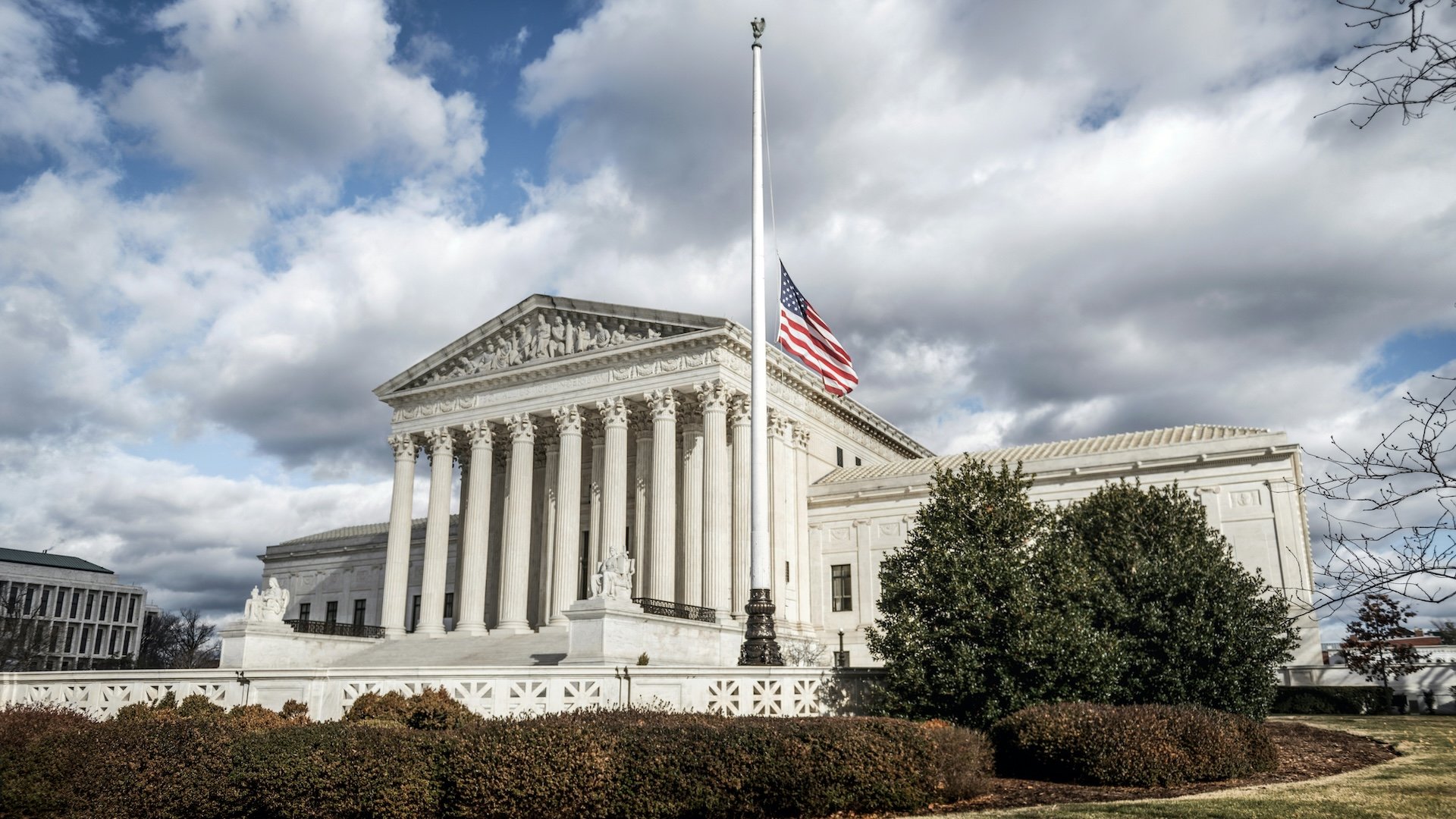
As the fashion industry continues to grapple with steep tariffs against its major trading partners, the Trump Administration is facing push backs on its trade policies that will culminate in a Supreme Court ruling. In the end, apparel would benefit from a roll back of the tariffs—and the ensuing refunds that could follow—but even with a win in court, that could be just the beginning. History has shown that any return of duties owed would only happen with proactive action by each affected company. And worse, there are other legal pathways for Washington to continue to push its trade agenda.
The following is an excerpt from the Hertzman Global Intelligence call on September 11, “DDP & Other Risky Activities,” hosted by HGI founder Edward Hertzman with Nicole Bivens Collinson, managing principal, Sandler, Travis & Rosenberg, P.A.; and Vincent Iacopella, president of government and trade relations, Alba Wheels Up.
Learn the timeline leading up to a Supreme Court ruling, why there’s a question if any refunds would even ever be on the table and what Trump could do next—win or lose.
Watch the full video here.
Edward Hertzman: I ask 10 people this question, I get 12 answers, so let’s see where we land today. We have to address the court ruling against Trump tariffs. A federal court said some of the tariffs were illegal. Can you explain what this means, and which tariffs this applies to?
Nicole Bivens Collinson: In both [district courts and the Court of International Trade], the lower courts have said the tariffs are not legal under the International Economic Emergency Powers Act, the IEEPA tariffs. The President did not have the authority to impose those tariffs. They have been appealed. So they went to, in the instance of the Court of International Trade, to the Court of Appeals for the Federal Circuit. Again, this is federal, global across the nation.
The Court of Appeals for the Federal Circuit basically agreed with the lower court, Court of International Trade, and said, ‘yep, we agree, but we’re sending it back to you, and we want you to look at it and tell us Does this apply to everybody? Does it apply to all tariffs? How is it going to apply?’ The government appealed that. Now, what’s important, too, is the first instance when this was heard before the Court of International Trade, it was heard before three judges. So, three federal judges said, ‘not legal.’
When it was heard in the Court of Appeals for the Federal Circuit, it was heard by 11 judges. Very unusual to have what they call an en banc, when everybody hears it. Seven of the 11 agreed. So now we’ve got 10 federal judges that all agree that this is not legal. The Department of Justice appealed to the Supreme Court. The Supreme Court said, we’re going to take it up on an expedited basis. They are then going to make a decision, and there’s two cases that were appealed to the Supreme Court and they’re taking them together.
“[The tariffs] may change their form, and they may not apply universally as they are now, but on the major trading partners, I think we need to be prepared for something that would replace them.”
—Nicole Bivens Collinson
So how long is this going to take? I can tell you that the government’s opening briefs are due September 19. Then the non-government plaintiffs have until October 20th, a month later, to submit their comments. Then the government can come back and rebut those due by October 30th. The Supreme Court said that they are willing to hear this in their first week of November. Each side has an hour. And then we got decision time, and we don’t know when that’s going to happen. We have seen, historically, when the Supreme Court hears cases, that their decisions come out in the summer. So, we may not hear anything until then. So, what happens?
Until that time—and I think at the very earliest, we could possibly hear something might be by the end of this year, otherwise it’s probably going to be late next summer—you’re going to have to pay tariffs. The tariffs are going to stay in place.
If the courts come back and they say, ‘Okay, they’re illegal. Give the money back,’ that’s good, but does customs automatically refund it? Or do you have to take action? If I have to take action, which is where I think they would probably come down, the Treasury Department could be saying a lot of these people just may not do it. They may not file the paperwork. They may not file the protest. I don’t know if it’s going to be a post-summary correction [or] if it’s going to be a protest, if you’re going to have to file a court case, if there’s going to be a class action to do it. We don’t know what that action is, but the odds are, if you make them do something, you’re going to be able to keep some of that money, and not everybody’s going to go in.
Vincent Iacopella: It reminds me of the CAFTA [Dominican Republic-Central America Free Trade Agreement] refunds, where some of them were liquidated and some of them weren’t. So, the ones that were liquidated were protests… It was a mess.
I’ll tell you one thing. I wouldn’t count on automatic reliquidation on CBP’s side.
To Nicole’s point, they’re not going to be in a hurry to give this money back, but I think it’s interesting, though, because there are a couple of different discussions going on out in the market about how to position yourself to get the money back, and there’s some options to get it back even earlier, depending on, even the outcome of the case. If it’s due back legally, they have to find a way to do it… It’d be interesting to see if it has a timer on it. I heard that the case could win, and you don’t have to give it back. It’ll only be going forward and the government can keep what they’ve collected. I don’t see how that works.
EH: The thing that no one really talks about is once the retailers increase the cost of goods at retail, which is happening and going to continue to happen. I’d like to see an example—maybe other than the bagel store down the street that lowered the egg price 50 cents—they’re never going to go back, so I think a lot of this damage is already done, isn’t it?
NBC: I would say perfect example. Once the prices go up, and once they realize that the market can bear it, they’re going to stay up.
Which leads me to my next point, which is, let’s say that the Supreme Court actually sides with the lower courts, and let’s say that the tariffs are going to go away, and let’s say that they’re going to be refunded. There are other mechanisms—and if you listen to the arguments in the Court of International Trade, the very first court—the judges basically looked at the government and said, ‘You want to put these tariffs in place because of the deficit and the trade deficit. Well, Section 122 is the provision that you need to use in order to impose tariffs.’ And that allows the government to impose tariffs of up to 15% for 150 days on those countries with which we have trade deficits. Now, that 150 days can be extended by Congress. And I think in this Congress, it could be easily extended.
I also think in this current administration, they could say, ‘Congress extension be damned. I’m leaving it in place. Take me to court.’ I also think that this Administration could allow the 150 days to come, they don’t get extended, and on day 152, they renew it. So, there is a way to impose those tariffs. Now, those would only apply to those countries with which we have trade deficits. So, Brazil? Couldn’t apply. We’ve got a surplus with them.
But there’s another measure, it’s Section 338 of the Tariff Act of 1930. That provision actually allows you to put tariffs up to 50 percent on goods if we’ve found that the country is discriminating against the commerce of the United States.
But wait, there’s more. If you determine that the 50 percent is not acting as a strong enough deterrent, you can ban those countries’ goods.
But wait, there’s more. That provision also allows you, if it’s determined that a third country is benefiting from that effort—let’s say, said country China and said country Vietnam is now benefiting—you can take the same actions on the third country.
So, 338 is a huge thing.
Even if we hope the tariffs are going to be gone after the end of the court case, we all need to be prepared that there could still be additional tariffs invoked under 122, Section 232, or Section 338. So, I don’t think they’re going to go away. They may change their form, and they may not apply universally as they are now, but on the major trading partners, I think we need to be prepared for something that would replace them.


